
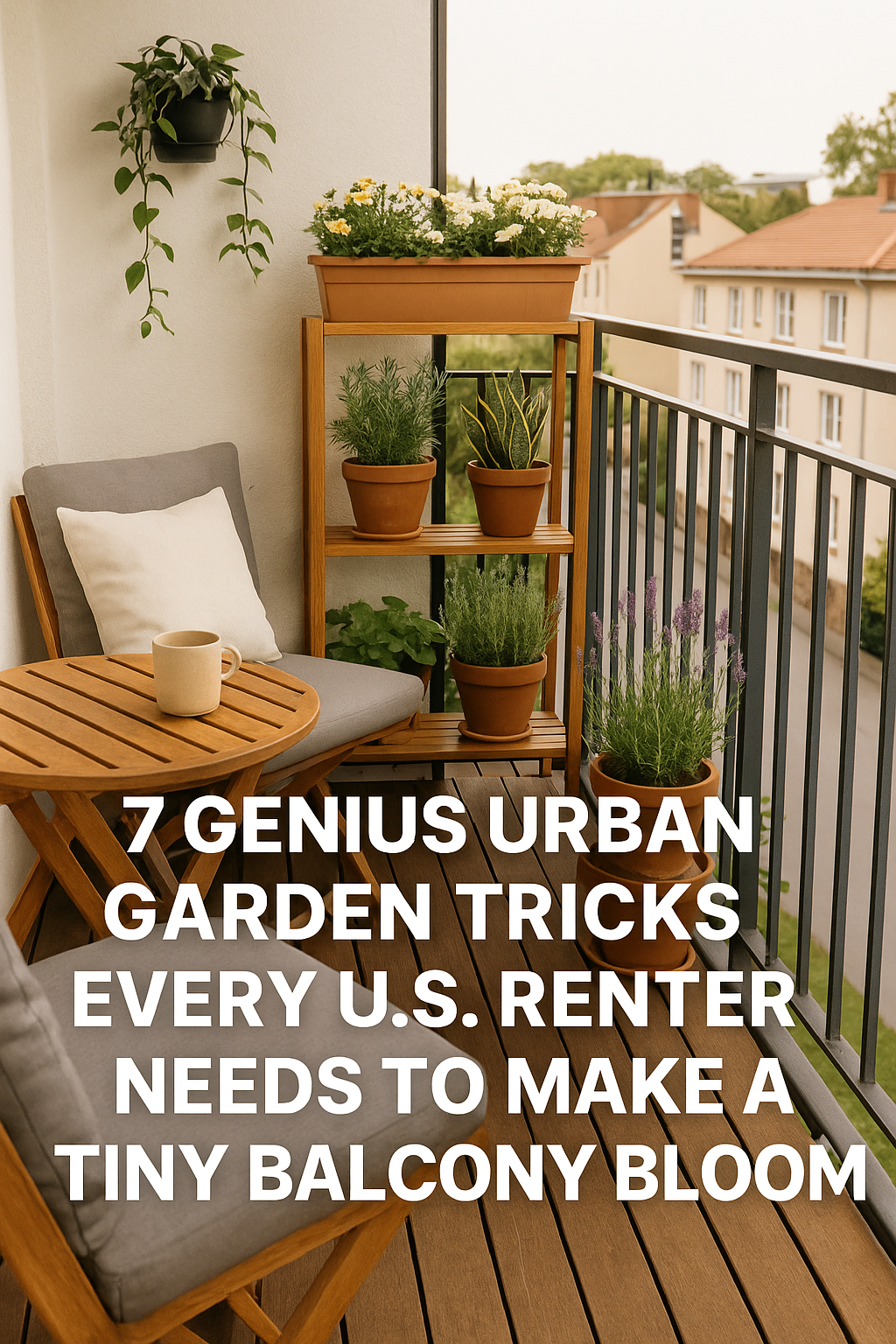
Let’s be real — most U.S. city apartments don’t come with those dreamy wraparound balconies you see on HGTV. If you’re lucky, you’ve got a 3-by-6-foot concrete slab squeezed between the A/C unit and a rusty railing. But guess what? Even that can become your mini urban jungle. 🌱
Whether you’re in a Chicago high-rise, a New York walk-up, or a Los Angeles studio, these 7 clever urban gardening tricks will help your tiny balcony bloom — no matter how little sunlight, space, or budget you have.
🌼 1. Go Vertical — When You Can’t Go Wide
In small-space gardening, walls are your best friends.
Use your balcony railing, side walls, or even a sturdy ladder shelf to build upward instead of outward. Hanging planters, stackable pots, or simple S-hooks on railings can multiply your planting space instantly.
For example:
- Hang lightweight fabric pockets on the wall — perfect for herbs like basil, thyme, or mint.
- Repurpose an old shoe organizer to grow strawberries or succulents (yes, it actually works!).
- Stack crates or wooden boxes vertically to create a rustic “plant tower.”
👉 Pro tip: Think of your balcony like a bookshelf. The higher the shelf, the lighter the plant should be. Keep heavy planters on the floor and trailing vines or herbs up high for balance.
🌞 2. Master the Light Game
Not all balconies face the same direction — and that’s your starting point.
- South-facing balconies (common in U.S. apartments) get tons of sunlight. Great for tomatoes, peppers, or lavender.
- North-facing ones? You’ll need shade-tolerant plants like ferns, pothos, or peace lilies.
If you barely get any sun, invest in clip-on grow lights that attach to railings or furniture. Many city gardeners now use these to mimic daylight for 6–8 hours — a small trick that makes a huge difference.
💡 Think of it like giving your plants their own little morning coffee boost.
🪴 3. Choose Smart Pots Over Heavy Planters
Let’s talk pots — because not all are created equal.
Concrete and ceramic planters look gorgeous but can be backbreakers (and sometimes over your building’s weight limit). Instead, go for lightweight, breathable materials like fabric grow bags or resin pots.
Here’s the magic:
- Fabric pots encourage root air circulation, helping plants grow stronger.
- Resin or recycled plastic containers hold moisture longer — ideal for forgetful waterers (no judgment here).
- You can move them around easily when the seasons change.
🪴 Try this: Line your balcony edge with rectangular railing planters. It adds instant greenery without taking up floor space.
🌿 4. Mix Plants with Purpose — Not Just Pretty
Sure, a balcony full of flowers looks cute on Instagram. But smart city gardeners grow multi-tasking plants — ones that clean the air, repel bugs, and even flavor dinner.
Try this balanced trio:
- Lavender → smells amazing + keeps mosquitoes away.
- Rosemary → grows upright + flavors everything from chicken to cocktails.
- Snake plant → absorbs toxins + thrives on neglect.
Imagine sipping lemonade next to a wall of rosemary and lavender on a 4th of July afternoon — that’s peak U.S. summer bliss right there. 🇺🇸
💧 5. Create a “Lazy Watering” System
Let’s face it — you’re busy. Between commuting, weekend errands, and Netflix marathons, watering can be forgotten.
Solution? DIY self-watering hacks.
You don’t need fancy gadgets.
- Fill a wine bottle with water, flip it upside down, and stick it into the soil (the slow drip keeps it hydrated for days).
- Use a cotton rope wick between a water container and your pot — perfect for when you’re away for the weekend.
- Group plants close together; they naturally share humidity and stay moist longer.
💦 Think of it as teamwork — your plants helping each other survive your schedule.
🪻 6. Add a Pop of Personality (Without Clutter)
Your balcony doesn’t need to look like a greenhouse exploded. Style it smartly — functional and cozy.
Use multi-purpose décor:
- A small foldable bistro table that doubles as a potting station.
- String solar lights that highlight your plants at night (and make evening tea feel magical).
- Old mason jars as candle holders or mini succulent pots.
Bonus: add a small outdoor rug or floor cushion. Suddenly your 20-square-foot balcony becomes your favorite morning coffee spot. ☕
🌻 7. Rotate with the Seasons
Even if your balcony faces the perfect direction, seasons change — and so should your setup.
Here’s a quick seasonal swap guide for U.S. climates:
- Spring: Start herbs and leafy greens like spinach and parsley.
- Summer: Go bold — tomatoes, peppers, marigolds.
- Fall: Transition to mums, ornamental kale, or mini pumpkins for Thanksgiving vibes.
- Winter: Bring hardy plants inside or switch to evergreens and LED-lit décor.
You don’t need a new garden every few months — just swap out planters or accents. It keeps your balcony feeling fresh and seasonally relevant (great for Pinterest photos too 😉).
🌸 Mini Bonus Hack: Make It a Pollinator Stop
If you’re in a city like Boston, Atlanta, or Seattle, your tiny balcony can actually help the environment.
Planting pollinator-friendly species (like zinnias, echinacea, or bee balm) attracts bees and butterflies — vital for local ecosystems. Even one or two pots can make a small but meaningful difference.
So yes, your balcony can be cute and conscious.
🏙️ Final Thoughts: Your Balcony = Your Micro-Escape
In a country where rent is rising faster than square footage, your balcony might be the only outdoor space you own. So treat it like your personal sanctuary. 🌿
With the right vertical setups, smart pots, and self-watering hacks, you can create a green escape just steps from your living room — one that lowers stress, boosts air quality, and adds joy to your everyday routine.
Even a 4-foot balcony in San Francisco or a brick-walled ledge in Chicago can bloom beautifully — you just need a little creativity (and maybe a wine bottle for watering). 😉
Key Takeaway:
Your balcony may be small, but it holds big potential.
→ Think up, not out.
→ Choose plants that work for your light.
→ Keep it low-maintenance but full of life.
Because when your mini balcony starts to bloom, so does your mood — one pot, one sprout, and one peaceful moment at a time. 🌸
Q1. What are the best lightweight pots for small U.S. balconies?
Choose resin, recycled plastic, or fabric grow bags. They’re lightweight, weather-resistant, and easy to move during seasonal changes — perfect for renters who can’t use heavy ceramic planters.
Q2. What plants are good for vertical balcony gardens in U.S. cities?
Herbs like basil and thyme, small flowering plants like petunias, and trailing vines such as pothos are perfect. They grow well in railing planters or hanging vertical setups common in city apartments.
Q3. Can I grow vegetables on a balcony if I live in an apartment?
Yes! Cherry tomatoes, peppers, lettuce, and herbs do great in containers. Just ensure 4–6 hours of sunlight or use artificial grow lights if your balcony faces north or is shaded by nearby buildings.
Q5. What are some low-maintenance plants for busy U.S. renters?
Opt for snake plants, succulents, ZZ plants, or rosemary. These hardy varieties thrive with minimal watering — ideal for Americans who travel often or have packed schedules.

