
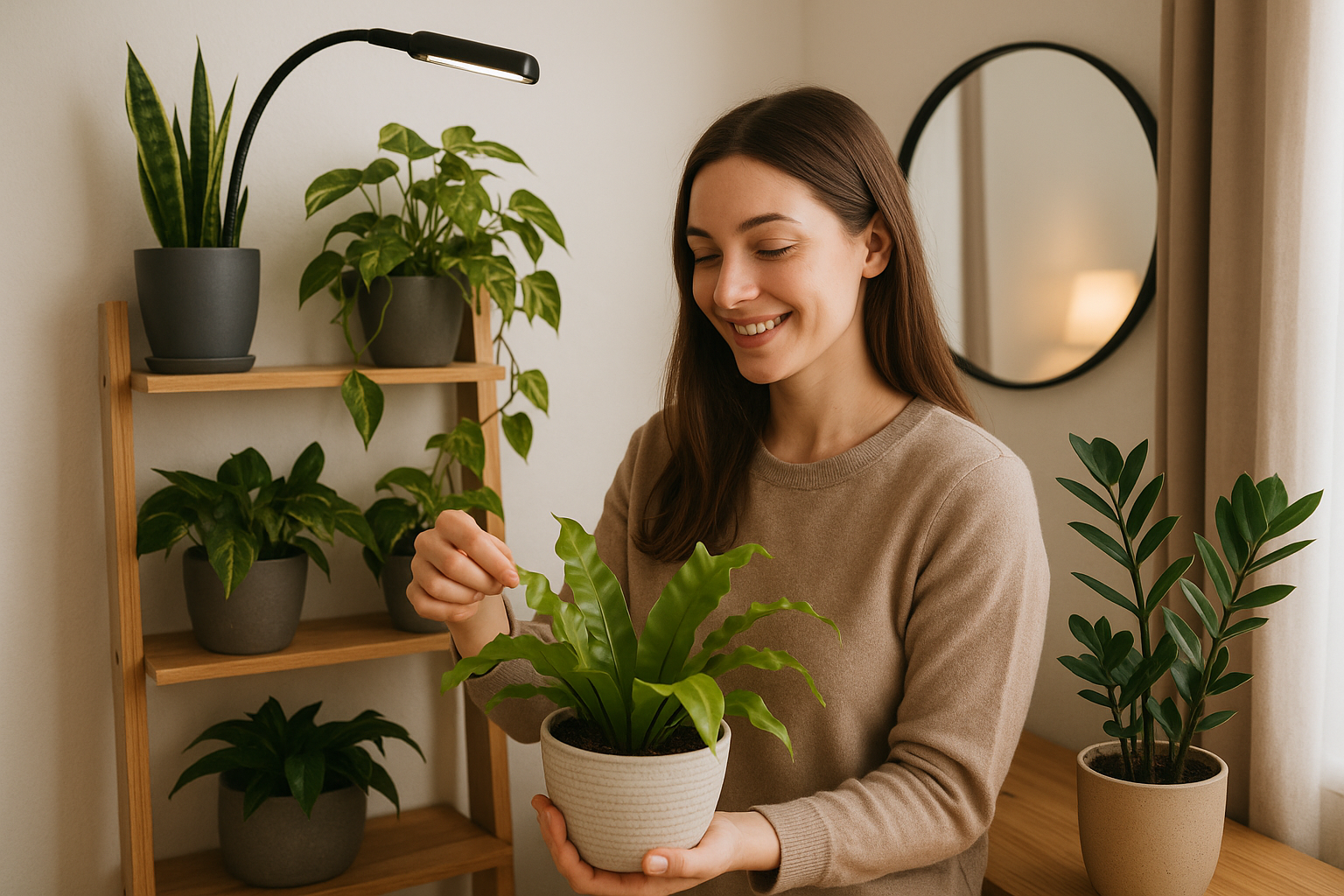
Let’s be honest — not every U.S. apartment is blessed with sunlight. Maybe your windows face a brick wall, or you’re on the first floor of a Boston brownstone where the sun peeks in only for 20 minutes a day. 🌥️
Still, that doesn’t mean you have to give up your dream of having a lush, green home. With the right plants, smart lighting tricks, and a few creative hacks, you can create a thriving indoor garden — even in the darkest corners of your apartment.
Let’s dig into 7 no-sunlight garden hacks that actually work for U.S. renters and small-space homeowners in 2025. 🌱
🌿 1. Choose Plants That Love the Shade
This is the number one mistake beginners make — they buy plants that need full sunlight and expect them to survive near a hallway lamp.
Instead, pick true low-light plants that are used to forest-like environments. Think of varieties that thrive in indirect or filtered light.
Here are your best bets for U.S. apartments:
- Snake Plant: Nearly indestructible, tolerates dark corners.
- ZZ Plant: Glossy leaves, grows even under fluorescent light.
- Pothos: Fast-growing and forgiving — perfect for hanging baskets.
- Peace Lily: Adds elegance and purifies air, even in shade.
💡 Safety tip: Keep peace lilies and pothos out of reach of pets — their sap can be mildly toxic to cats and dogs.
These plants don’t just survive in low light — they thrive in it, which makes them perfect for basements, windowless bathrooms, or north-facing apartments.
💡 2. Use Artificial Light That Mimics the Sun
No window? No problem. Artificial grow lights have evolved big-time.
In 2025, many U.S. apartment gardeners use LED grow bulbs that mimic natural daylight (usually labeled 4000K–6500K). These energy-efficient lights plug into regular lamp sockets and can keep your greens happy year-round.
Here’s the trick:
- Keep lights 6–12 inches above your plants.
- Run them for 10–12 hours per day to simulate daylight.
- Use timers so you never forget to switch them off.
🎯 Pro tip: Choose bulbs labeled “full spectrum.” They provide both warm and cool light wavelengths your plants need to photosynthesize properly.
⚠️ Safety tip: Always check wattage and ventilation before using grow lights in small enclosed areas to prevent overheating.
🪴 3. Reflect and Amplify Existing Light
Even if you get limited light, you can bounce it around your space to make it go further.
Use mirrors, light-colored walls, or glossy surfaces to reflect light deeper into your apartment. Placing a mirror opposite your window can double the reach of sunlight — it’s like having a second window without remodeling.
If your apartment is darker (hello, NYC basement dwellers 👋), choose a corner where artificial light from your lamps already hits — that glow can support low-light species like ZZ or pothos.
💭 Imagine this: A tiny Chicago studio with one north-facing window, a mirror beside the plant stand, and a single lamp — suddenly it feels like daylight all afternoon.
🌿 4. Go Vertical — Plants Grow Up, Not Out
When space and sunlight are both limited, think vertically.
Install a tiered shelf or a hanging wall planter near your best light source (even if it’s artificial). Low-light plants like pothos and ivy love to trail down shelves, which creates a lush, jungle feel without cluttering your living area.
Try this layout:
- Top shelf: Snake plant or ZZ (they handle higher temps from ceiling lights).
- Middle shelf: Pothos or ferns for mid-level growth.
- Bottom shelf: Peace lily or philodendron where it’s cooler and shadier.
🪵 Material tip: Use sturdy, moisture-resistant shelving (like sealed wood or coated metal) to prevent mold or water damage in humid corners.
💧 5. Master the “Less Is More” Watering Rule
No sunlight means slower evaporation — and overwatering is the #1 killer of indoor plants in U.S. apartments.
The trick: let the soil dry halfway before watering again. Stick your finger an inch deep into the soil — if it feels moist, wait.
For very low-light setups, water every 10–14 days on average (depending on indoor temperature and humidity).
🌦️ Pro tip: Grouping plants together increases humidity naturally, which keeps them happier and reduces how often you water.
⚠️ Safety tip: Always use pots with drainage holes — stagnant water leads to root rot and mold growth, especially in small enclosed spaces.
🌾 6. Create a “Light Layered” Garden Setup
Think of your apartment like a mini ecosystem — every light source counts.
Combine ambient light (your regular lamps), task lighting (like a reading light), and plant-specific lighting (grow bulbs) for layered brightness.
Example:
A Brooklyn renter might place a ZZ plant under a desk lamp, snake plants near a hallway lamp, and a peace lily under a grow bulb timer — all sharing ambient light from different angles.
💡 Result: Every plant gets a little light, and your home feels balanced — no more “dead corner” look.
🪞 Bonus aesthetic tip: Add fairy lights or LED strips around your plant shelf — the soft glow turns your garden into a cozy, Pinterest-worthy feature wall.
🌼 7. Choose the Right Planter and Soil Mix
Plants in low light don’t drink as much water, so you need fast-draining soil and breathable pots.
Use containers with drainage holes and add a layer of small pebbles or perlite at the bottom. This prevents soggy roots and fungus gnats (a common U.S. apartment nuisance).
For added charm, choose ceramic or matte-finish planters in neutral tones — they reflect more light and blend well with modern décor.
🌱 Pro tip: Repurpose jars, mugs, or old kitchen containers as mini planters — sustainable and stylish for tight spaces.
🌸 Bonus: Add Green Where You Least Expect It
If your main rooms are too dark, sneak plants into unexpected corners:
- Bathroom: High humidity = happy ferns.
- Hallway shelf: Add a trailing pothos near your lamp.
- Bedroom: A snake plant improves air quality while you sleep.
Even artificial greenery can make a difference psychologically — studies show that simply seeing plants (real or faux) reduces anxiety levels and boosts mood.
🌿 Final Thoughts: No Sun? No Problem.
Not every U.S. apartment was designed with sunlight in mind, but that shouldn’t stop you from growing a green, calming space. 🌱
With the right low-light plants, reflective tricks, and safe lighting hacks, you can build your own indoor sanctuary — one that fits city living and your budget.
So whether you’re renting a compact studio in Seattle or a basement apartment in New Jersey, remember: even the darkest corners can bloom — they just need a little care, the right setup, and your touch.
Because when your plants thrive, your home (and your mind) does too. 🌿

